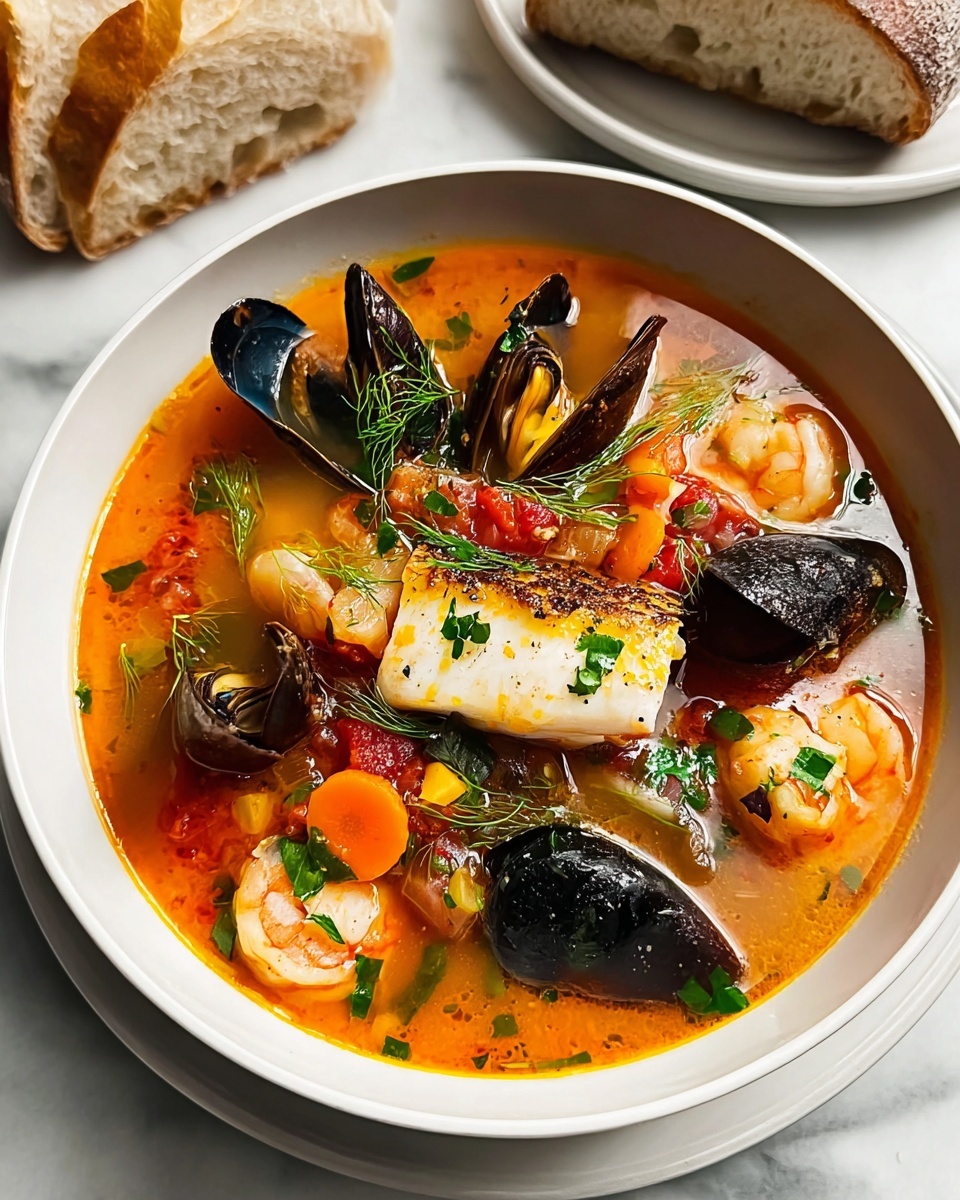
If you’ve ever dreamed of capturing the essence of the French Riviera in a bowl, this Bouillabaisse Recipe is your ticket to seafood paradise. Rich with layers of flavor from fresh fish, fragrant saffron, and a medley of aromatic vegetables, this classic Provençal stew warms the soul and brings a festive touch to any table. Whether you’re a seasoned cook or trying your hand at something new, diving into this Bouillabaisse Recipe will fill your kitchen with irresistible aromas and your dinner guests with delight.
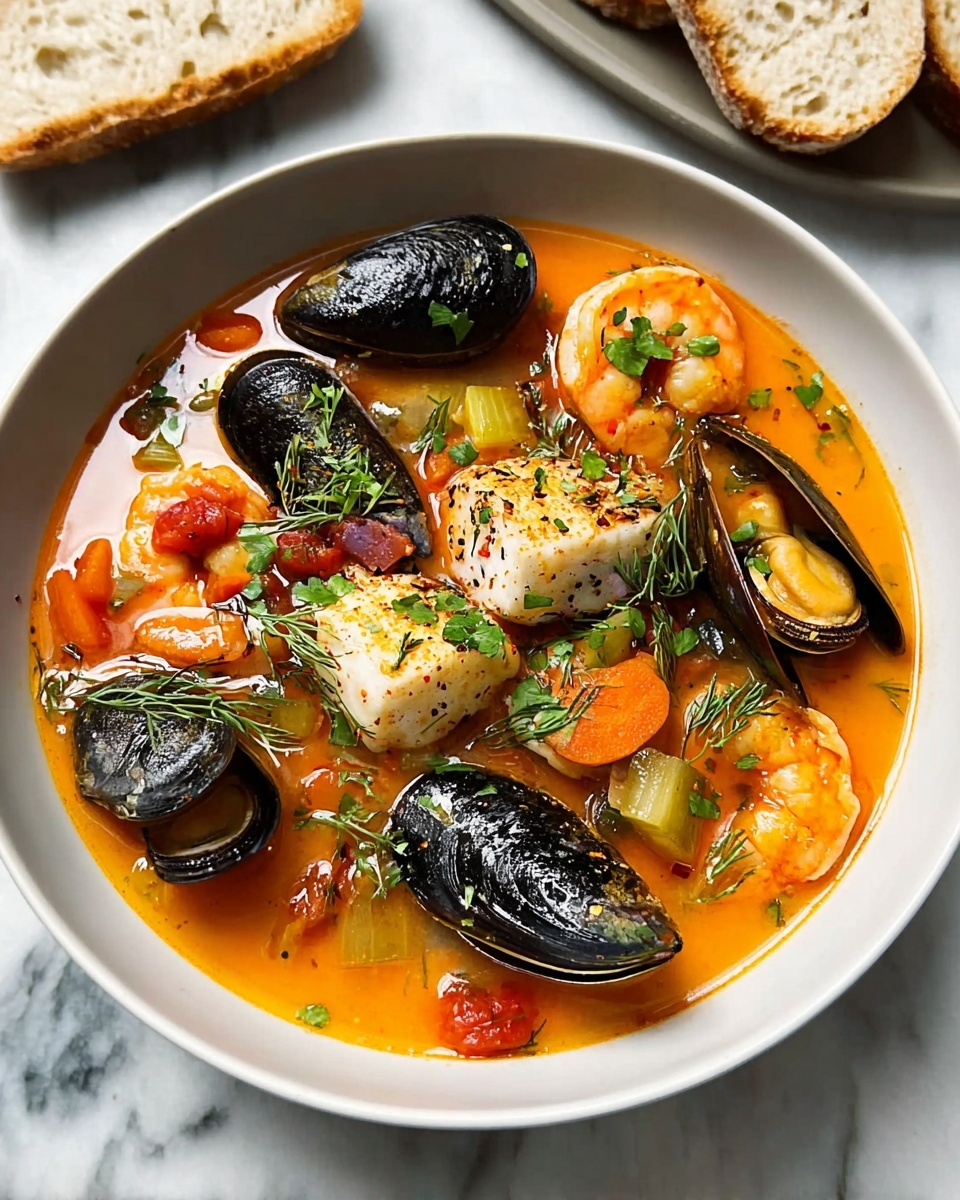
Ingredients You’ll Need
Keeping it simple yet vibrant, the ingredients for this Bouillabaisse Recipe are each essential to building the depth of flavor, texture, and color that make this dish so special. From the sweetness of leeks to the zing of orange zest, every component plays its part perfectly.
- Olive oil: The foundation for sautéing, adding a fruity richness to the base.
- Onion: Provides a natural sweetness and aromatic base when finely chopped.
- Leeks (white parts only): Adds a delicate, mild onion flavor that complements seafood beautifully.
- Garlic cloves: Brings depth and a hint of warmth, making the broth irresistible.
- Fennel bulb: Offers a subtle anise-like flavor and crunch when thinly sliced.
- Large tomatoes: Give a fresh, vibrant acidity and lovely color to the stew.
- Saffron threads: The star spice, delivering that unmistakable golden hue and floral aroma.
- Orange zest: Injects a bright, citrusy note that lifts the entire dish.
- Bay leaves: Infuse a gentle herbaceous warmth during simmering.
- Fresh thyme sprig: Adds earthiness and complexity to the broth.
- Dried red pepper flakes (optional): For a subtle kick that enhances the flavors without overpowering.
- White Grape Juice or Apple Cider Vinegar, Vegetable or Fish Stock with Vinegar: Balances the broth with a clean acidity and depth.
- Fish stock or water: The body of the soup, rich with savory undertones.
- Firm white fish (cod, halibut, or monkfish): Adds meaty texture and mild flavor that soaks up the broth wonderfully.
- Mussels: Contribute briny sweetness and a classic appearance once they open.
- Shrimp: Tender and juicy, bringing a pop of color and sweetness.
- Scallops: Delicately sweet and tender, adding luxury to every bite.
- Salt and freshly ground black pepper: Essential for seasoning and balancing flavors.
- Baguette: Crusty and toasted, perfect for soaking up all the delicious broth.
- Rouille sauce (optional): A garlicky, spicy mayo-style sauce that elevates the serving experience.
How to Make Bouillabaisse Recipe
Step 1: Warm Your Base
Start by heating the olive oil gently in a large pot over medium heat, setting the stage for the vegetables to soften and release their flavors. This initial step is key to developing a fragrant and inviting base for your Bouillabaisse Recipe.
Step 2: Sauté the Aromatics
Add the finely chopped onion, sliced leeks, minced garlic, and thinly sliced fennel to the pot. Cook them together for about 5 to 7 minutes until they become soft and fragrant, stirring occasionally to prevent sticking. This bouquet of vegetables will fill your kitchen with a beautiful aroma—almost like a promise of what’s to come.
Step 3: Build the Flavor Layers
Stir in chopped tomatoes, saffron threads, orange zest, bay leaves, fresh thyme, and red pepper flakes if you like a touch of heat. Let everything cook together for about 5 minutes, which allows the spices and citrus to infuse the vegetables, giving your broth vibrant color and complexity.
Step 4: Add the Liquids and Simmer
Pour in your choice of white grape juice or apple cider vinegar combined with vegetable or fish stock, bringing the mixture to a boil. Then, lower the heat and let it simmer gently for 10 minutes. This slow cooking melds the acidity and sweetness beautifully, preparing the broth to become the soul of your Bouillabaisse Recipe.
Step 5: Introduce the Fish Stock
Next, add the fish stock and raise the heat just enough to reach a gentle boil. Season the broth with salt and freshly ground black pepper to taste. The fish stock deepens the oceanic flavor, making this stew authentically rich and savory.
Step 6: Let the Broth Develop
Turn the heat down to low and let the broth simmer for 15 to 20 minutes. This slow simmer allows all the flavors to blend seamlessly, creating that quintessentially luxurious and comforting Bouillabaisse base.
Step 7: Add the Seafood
Carefully add chunks of firm white fish, mussels, shrimp, and scallops into the pot. Cover and cook for 5 to 7 minutes until the seafood is tender and the mussels have opened up wide. Discard any mussels that remain closed, as they aren’t safe to eat. This final cooking step cooks the seafood to perfect succulence while keeping the broth flavorful.
Step 8: Final Seasoning and Serve
Adjust the seasoning as needed with extra salt and pepper. Serve your stunning Bouillabaisse Recipe piping hot alongside toasted baguette slices and a dollop of rouille sauce if you desire. The contrast between the crispy bread and the luscious stew is simply fantastic and utterly traditional.
How to Serve Bouillabaisse Recipe
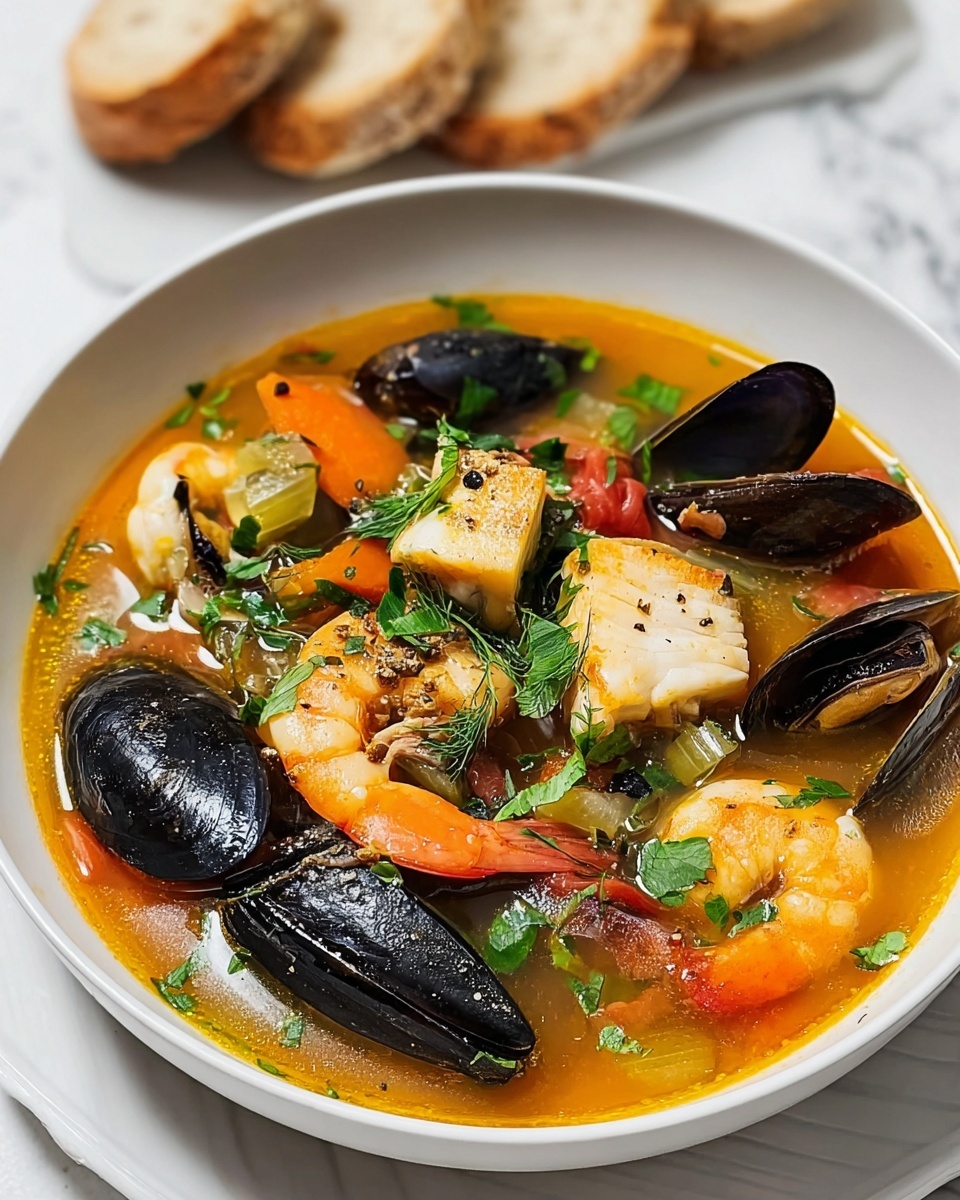
Garnishes
Fresh herbs like chopped parsley or thyme sprinkled over the top add a lovely burst of color and freshness. A few thin slices of lemon on the side can brighten the rich broth just before eating. Don’t forget the rouille sauce—it’s more than a garnish; it’s a creamy, garlicky partner to the bread and soup that takes the experience to the next level.
Side Dishes
This Bouillabaisse Recipe is hearty on its own but pairs beautifully with a simple green salad dressed lightly with lemon and olive oil to balance the meal. A chilled glass of dry white wine or rosé complements the seafood flavors perfectly and adds a touch of elegance to your table setting.
Creative Ways to Present
For a dramatic dinner party, serve the Bouillabaisse Recipe in individual rustic bowls with the seafood artfully arranged on top. You can also offer the broth and seafood separately, allowing guests to customize their portions. Using clear glass bowls highlights the vibrant colors and textures, making it almost too lovely to eat (almost!).
Make Ahead and Storage
Storing Leftovers
After enjoying your Bouillabaisse Recipe, store any leftovers in an airtight container in the refrigerator. The flavors actually deepen after sitting for a day, so it makes for an even tastier meal the next day. Just be sure to consume within 2 days for optimal freshness and safety.
Freezing
If you want to save this classic stew for longer, freezing is an option, but it’s best to freeze the broth and seafood separately. Seafood can become rubbery when frozen, so add fresh seafood when reheating if possible. Store broth in a freezer-safe container for up to 3 months.
Reheating
Reheat gently on the stovetop over low-medium heat to ensure the flavors meld without overcooking the seafood. If frozen, thaw the broth overnight in the fridge before reheating. Add any fresh seafood towards the end of reheating for the perfect texture and taste.
FAQs
Can I use other types of seafood in this Bouillabaisse Recipe?
Absolutely! While traditional Bouillabaisse features certain fish and shellfish, feel free to add clams, crab, or even lobster depending on availability and preference. Just adjust cooking times accordingly to avoid overcooking.
What is the best way to clean mussels before cooking?
Scrub the mussels under cold running water to remove any debris and use a small knife to debeard them by pulling off the fibrous “beard” sticking from the shell. Discard any mussels that are cracked or do not close when tapped.
Is saffron necessary for authentic flavor in this recipe?
Saffron is a key ingredient that gives Bouillabaisse its signature aroma and golden color. While expensive, it’s definitely worth it for authenticity. If you’re in a pinch, you can use a small pinch of turmeric for color but note that the flavor will differ.
Can I make this recipe vegetarian or vegan?
For a vegetarian version of Bouillabaisse, you can substitute fish stock with vegetable stock and omit seafood, replacing it with hearty vegetables like artichokes, potatoes, and mushrooms. While it won’t be traditional, it will still be a delicious, comforting stew.
What’s the secret to getting the broth so flavorful?
Slowly building layers of flavor by sautéing aromatics first, using quality fish stock, adding saffron and herbs, and letting everything simmer gently allows the broth to develop its complex, rich character that defines the Bouillabaisse Recipe.
Final Thoughts
There’s something truly magical about preparing a Bouillabaisse Recipe—it’s like bringing a piece of the Mediterranean coast right into your kitchen. Each spoonful offers a taste of history, warmth, and joy that’s perfect for sharing with loved ones. So go ahead, gather your ingredients, and dive into this wonderful seafood stew. Trust me, it’s a taste adventure you’ll want to make again and again.
Print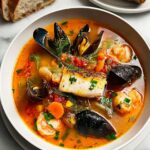
Bouillabaisse Recipe
- Prep Time: 15 minutes
- Cook Time: 40 minutes
- Total Time: 55 minutes
- Yield: 4 to 4.5 servings
- Category: Main Course
- Method: Stovetop
- Cuisine: French
Description
Bouillabaisse is a classic French seafood stew originating from the port city of Marseille. This vibrant and aromatic dish combines an array of fresh seafood with fragrant herbs, saffron, and ripe tomatoes, simmered together to create a rich, flavorful broth. Served with toasted baguette slices and traditional rouille sauce, this recipe is perfect for a hearty, elegant meal that brings the taste of the Mediterranean to your table.
Ingredients
Seafood
- 1/2 pound firm white fish (cod, halibut, or monkfish), cut into chunks
- 1/2 pound mussels, scrubbed and debearded
- 1/2 pound shrimp, peeled and deveined
- 1/2 pound scallops
Vegetables & Herbs
- 1 large onion, finely chopped
- 2 leeks (white parts only), thinly sliced
- 3 garlic cloves, minced
- 1 fennel bulb, thinly sliced
- 4 large tomatoes, chopped
- 2 bay leaves
- 1 sprig fresh thyme
- 1 teaspoon orange zest
Liquids & Seasonings
- 2 tablespoons olive oil
- 1/2 teaspoon saffron threads
- 1/2 teaspoon dried red pepper flakes (optional)
- 1 cup white grape juice or apple cider vinegar, vegetable or fish stock with vinegar
- 4 cups fish stock or water
- Salt and freshly ground black pepper to taste
To Serve
- 1 baguette, sliced and toasted
- Rouille sauce (optional, for serving)
Instructions
- Heat olive oil: Warm 2 tablespoons of olive oil in a large pot over medium heat to prepare for sautéing the vegetables.
- Sauté vegetables: Add the finely chopped onion, sliced leeks, minced garlic, and thinly sliced fennel to the pot. Cook for 5 to 7 minutes until the vegetables soften and release their fragrance.
- Add aromatics: Stir in chopped tomatoes, saffron threads, orange zest, bay leaves, fresh thyme sprig, and optional dried red pepper flakes. Cook this mixture for an additional 5 minutes to blend the flavors.
- Add base liquids and simmer: Pour in 1 cup of white grape juice or apple cider vinegar combined with vegetable or fish stock containing vinegar. Bring the mixture to a boil, then reduce heat to a simmer and cook for 10 minutes.
- Add fish stock: Stir in 4 cups of fish stock or water, and bring to a gentle boil. Season with salt and freshly ground black pepper to taste.
- Simmer broth: Reduce heat to low and let the broth simmer gently for 15 to 20 minutes for flavors to meld.
- Cook seafood: Add chunks of white fish, mussels, shrimp, and scallops to the pot. Cover and cook for 5 to 7 minutes until the seafood is cooked through and the mussels open. Discard any mussels that remain closed.
- Final seasoning and serve: Taste and adjust salt and pepper as needed. Serve the bouillabaisse hot, accompanied by toasted baguette slices and optional rouille sauce for spreading.
Notes
- Saffron is a key ingredient for authentic flavor and color, but can be expensive; substitute with turmeric for color if desired.
- The choice of seafood can be varied based on availability but aim for firm white fish and shellfish that cook evenly.
- Ensure mussels are fresh and discard any that do not open during cooking as they may be unsafe to eat.
- Rouille sauce adds a spicy, garlicky kick and is traditional; a simple garlic mayonnaise can be used as a substitute.
- For a vegetarian version, omit seafood and use vegetable stock with additional vegetables like potatoes and zucchini.